Pupil Barrister

Tag: Books (Page 3 of 11)

On Borrowing and Buying e-Books

More on the trend towards the digitisation of books and what that means for culture, politics and society… this time, from George Orwell.

Given a good pitch and the right amount of capital, any educated person ought to be able to make a small secure living out of a bookshop…. Also it is a humane trade which is not capable of being vulgarized beyond a certain point. The combines can never squeeze the small independent bookseller out of existence as they have squeezed the grocer and the milkman.

Orwell did not forsee the rise of the Amazon behemoth!  Nevertheless, his 1936 essay ‘Bookshop Memories’ is still relevant today (indeed, one might argue that Orwell’s nack for remaining relevant is the source of his greatness).  Our current appeals to tactility-as-a-virtue are there, alongside concerns that the public generally has a taste for low-brow thriillers and romances, rather than classics from the canon.
Elsewhere, he mentions the fact that bookshops were also lending libraries.  In this, I wonder if there is a parallel with Amazon?  Since the early days of the Kindle, we have known that books one ‘buys’ for the machine are actually just licenced.  Three years ago, Amazon remotely deleted all copies of Nineteen Eighty-Four from Kindle devices, a manoever that was at once horrifying and hilarious.  Last month, a Norwegian woman was declared a persona non grata by the company, and all her purchases were deleted from her device without warning. Continue reading
Lost Souls and Crossroads

Back in 2006 or so, when blogging was The Next Big Thing That Everyone Was Doing, there was much discussion over whether a blog could kickstart a literary or journalistic career. Writers News even commissioned me to write an article about it, in which I quoted the economist and blogger Tim Worstall:

Tim Worstall, editor of the anthology 2005: Blogged, agrees. “I’m not sure that it is possible to make a living from blogging,” wrote Worstall, in his Second Anniversary blog post. “But”, he continued, “it is entirely possible to make a living out of having blogged.” Worstall sees blogging as an alternative to apprenticeships and unpaid internships, a route to paid writing.

I think we can cite many examples of writerswho gained exposure through blogging and then found paid writing gigs: David Allen Green and Laurie Penny at the New Statesman; book deals for PC David Copperfield and The Girl With A One Track Mind.
Another route is that taken by the creators of the Pornokitsch Blog, which takes the transatlantic Science Fiction & Fantasy culture as its beat.  They have used their blog as a springboard into the publishing world, leveraging using the contacts and credibility developed over four years of blogging, to produce a series of short story collections. The blog as route not into journalism, but publishing.
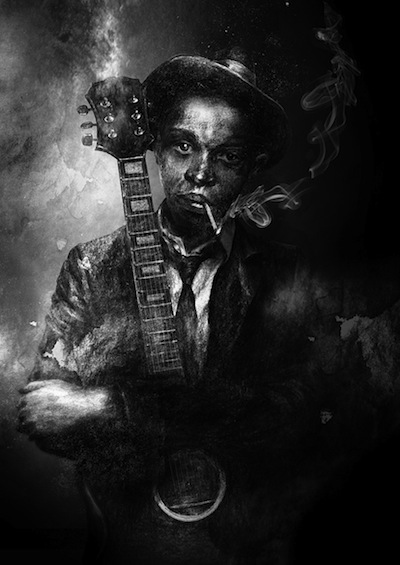
And who should be one of the authors they publish?  None other than… yrstrly.  My story (0,0) is in the Crossroads anthology, released on the Kindle in August 2012.  Its a companion book to Lost Souls, “tales of woe and angst, loneliness, redemption and humour” including stories by Arthur Conan-Doyle, Benjamin Disraeli and Mary Coleridge.  If you order the limited edition copy of Lost Souls, you get Crossroads on the Kindle for free. You cannot say fairer than that.

Crossroads cover

Crossroads (cover) by Vincent Sammy

The World of An Insignificant Woman

Over the past year, I’ve been working on a creative publishing challenge I set myself. It’s time to blog about it here and draw a line under the project.
A few years ago, my parents showed me a faded typed manuscript of a memoir, The World of an Insignificant Woman. It was written in the mid 1980’s by my grandfather’s sister, Catherine Thackray, about their parents and family. It is based in a large part on the handwritten memoirs and letters of my great-grandmother, Hilda Marjory Sharp (born 1882).
In recent years I’ve taken a particular interest in new forms of publishing. I drink in the columns of Cory Doctorow and the experiments of James Bridle (two London-based thinkers I have had the pleasure of meeting a few times, through English PEN and Free Word Centre activities). The potential of print-on-demand and eBook publishing is huge, and I had begun to think seriously about getting in on the micro-publishing action.
Continue reading

All Over Bar The Shouting?

A few days ago I tweeted the following:

I know I should be glued to #Leveson analysis, just have the feeling that it will all play out as it should without me. Passive politics.

A few people asked me about this, and suggested I should care more about this most important of issues.
To be clear, I was not doubting how important the Leveson Inquiry is, or the significance of the scandal(s) he is investigating. Rather, I just have a sense that the issue has reached something of an apotheosis, and that a better order of things will now inevitably result. Henry Porter’s column today captures my thinking:

We can take heart that Murdoch is already finished as a political force here, that the record of his morbid influence is being settled and serious crimes will be prosecuted. What we have to focus on now is protecting our democracy from the influence of such a character again.

Porter goes on to say that there are still questions left unanswered – for Alex Salmond and for Jeremey Hunt, in particular – but I think we can now be confident that those charged with getting to the bottom of this now have the political and moral clout to pursue these issues to their conclusion. A far cry from the days when Tom Watson MP was mocked for his obsession with phone-hacking at News of the World.

On The Censorship of Cricket

The thing that caught my ear this morning was the cricket scores. England are on tour, playing Pakistan… in Abu Dhabi. The English cricketers cannot travel to play in actual Pakistan due to security threats.
This echoes the problems experienced by delegates to the Jaipur Literary Festival last weekend. Threats of violence (real and imagined) kept Salman Rushdie away from the podium, and even derailed a planned video-link appearance.
In both cases, the threats of a few reactionaries are spoiling the chances of ordinary people to enjoy their preferred leisure activities. In both these cases they are Islamists, although Hindu Nationalists are guilty of similar ad hoc censorship of artists such as the late M.F. Hussain.
But anyway, my half-formed thought is this: I wonder to what degree the practice of sport might be considered ‘expression’ in the same way as we think of writing as expression? The elegance of Sport is often likened to dance, which undeniably a form of artistic expression. And dancers are routinely referred to as ‘athletes’ with similar fitness regimes. The need for an audience is common to both groups too. If an audience is barred from a performance, then that is an infringement of the artist’s freedom of expression. Is not the barring the Pakistani cricket fans from the games (by virtue of the games being played in another country) a similar infringement?
The problem is not experienced by the players. Since Pakistan has a proud cricketing heritage, with millions of enthusiasts. Denying these fans the ritual of test matches feels like a denial of their cultural expression too. The Islamic fundamentalists are demanding that their conception of Pakistan trumps any other ideas of what is important.
This is probably an old conversation for Pakistani cricket fans. Yet it is seldom discussed here in the UK. The fact that the Test Match venue has been moved to Dubai is not remarked upon by the sports reporters. I think it is a useful issue to highlight, because if these similarities between art and sport hold up, then that would be a very useful point for free expression campaigners to insert into the campaigning rhetoric. One assumes there are more sport-lovers than literature-lovers.

« Older posts Newer posts »

© 2026 Robert Sharp

Theme by Anders NorenUp ↑