Pupil Barrister

Tag: david allen green (Page 2 of 2)

Lost Souls and Crossroads

Back in 2006 or so, when blogging was The Next Big Thing That Everyone Was Doing, there was much discussion over whether a blog could kickstart a literary or journalistic career. Writers News even commissioned me to write an article about it, in which I quoted the economist and blogger Tim Worstall:

Tim Worstall, editor of the anthology 2005: Blogged, agrees. “I’m not sure that it is possible to make a living from blogging,” wrote Worstall, in his Second Anniversary blog post. “But”, he continued, “it is entirely possible to make a living out of having blogged.” Worstall sees blogging as an alternative to apprenticeships and unpaid internships, a route to paid writing.

I think we can cite many examples of writerswho gained exposure through blogging and then found paid writing gigs: David Allen Green and Laurie Penny at the New Statesman; book deals for PC David Copperfield and The Girl With A One Track Mind.
Another route is that taken by the creators of the Pornokitsch Blog, which takes the transatlantic Science Fiction & Fantasy culture as its beat.  They have used their blog as a springboard into the publishing world, leveraging using the contacts and credibility developed over four years of blogging, to produce a series of short story collections. The blog as route not into journalism, but publishing.
And who should be one of the authors they publish?  None other than… yrstrly.  My story (0,0) is in the Crossroads anthology, released on the Kindle in August 2012.  Its a companion book to Lost Souls, “tales of woe and angst, loneliness, redemption and humour” including stories by Arthur Conan-Doyle, Benjamin Disraeli and Mary Coleridge.  If you order the limited edition copy of Lost Souls, you get Crossroads on the Kindle for free. You cannot say fairer than that.
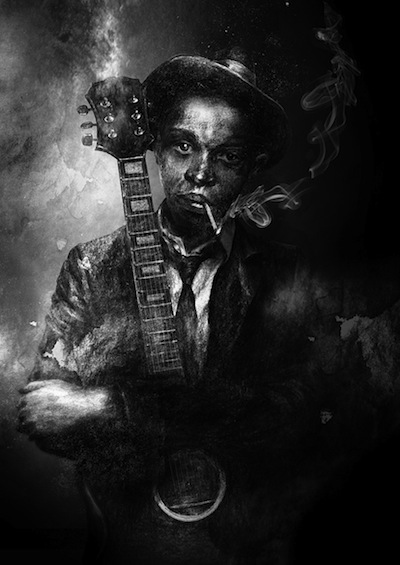
Crossroads cover

Crossroads (cover) by Vincent Sammy

Can Publishing Be a Form of Fact-Checking?

And now for some Inside Baseball.
Last week, I managed to irritate legal blogger Jack of Kent (a.k.a. David Allen Green) by suggesting he was being stingy with his links, and then not telling him about it.  This was not entirely true on either count – He was not being as unlinky as I had thought; and I had tried to let him know.
Since David and I have worked together on the Libel Reform Campaign, I assume that he is not going to sue me for trashing his reputation in the Guardian.  However, elements of our exchange got me thinking about issues of ‘responsibility’ in blogging.
Here’s the thing:  When David asked me “why didn’t you check?” I felt strangely short-changed, despitre the fact that I certainly had not checked with him beforehand.  This is because when I typed the original post, I fully expected David to become aware of it. Incoming links and twitter recommendations usually alert people to the fact they are being discussed.  Moreover, I think some part of my subconsicious decided that to cite him was, in effect, an invitation to respond.  The invitation was not explicit, but to me it feels like an integral part of the blogging conversation.
I write this not to try and get myself off the hook for the pint I know I must pay to David, but instead to ask how responsible blogging might be different from responsible journalism. A key pillar of the existing Reynolds Defence (a public interest defence for libellous statements) is the idea of verification before publishing.  But should this hold for bloggers?  What of the idea (which I had internalised until David complained) that the early publishing of comment or allegations on a blog or twitter, is in itself part of the verification and fact-checking process?  For citizen bloggers, publishing a claim online carries the implicit (and often explicit) request – “please help me verify”.
Mainstream media critics of blogging, and the politicians, certainly disagree, and see the publication of anything unchecked as being irresponsible.  I would appreciate thoughts on this from The Man Himself – Could this form of early publication online be considered ‘responsible’, due to the very nature of the medium?

Newer posts »

© 2026 Robert Sharp

Theme by Anders NorenUp ↑